If you've lifted your truck — or you're planning to — there's one question that matters more than almost anything else in your suspension setup: what shocks are you running? It's a question we hear every single week at our shop here in Tampa, and for good reason. The wrong shocks on a lifted truck don't just ride rough. They wear out your tires unevenly, beat up your ball joints, make highway driving feel sketchy, and can turn your daily commute down Dale Mabry or the Selmon Expressway into a punishment instead of a pleasure.
Choosing the right shocks for a lifted truck isn't as simple as grabbing whatever's cheapest on Amazon or picking the brand your buddy swears by. Your lift height, driving style, tire size, payload habits, and whether you actually take your truck off-road all play a role. This guide breaks it all down — from shock types and brand comparisons to price ranges and the mistakes we see Tampa truck owners make most often.

Let's start with the basics. Factory shocks are engineered around your truck's stock ride height, weight distribution, and suspension geometry. The moment you install a lift kit — whether it's a 2-inch leveling kit or a 6-inch suspension lift — you change the operating range of the shock absorber. Stock shocks are now either fully extended at rest, bottoming out over bumps, or both.
Here's what that actually means on the road:
Bottom line: if you've lifted your truck and you're still running stock shocks, you're leaving ride quality, safety, and component longevity on the table. The right aftermarket shocks, matched to your lift height, solve all of these problems.
Not all shocks are created equal, and the differences go way beyond brand logos. Here's what you need to know about the four main shock types you'll encounter when shopping for shocks for your lifted truck.
Twin-tube shocks are the most common and affordable design. They use two concentric cylinders — an inner tube where the piston travels and an outer tube that acts as a fluid reservoir. When the piston moves, hydraulic fluid flows between the two tubes through a base valve.
Pros: Affordable, widely available, adequate for street driving, and they come in lengths to match most lift heights. Brands like Rancho and Rough Country offer solid twin-tube options that are a big step up from stock.
Cons: They can overheat during sustained hard use (think extended off-road sessions or towing heavy loads in Florida summer heat). When they overheat, the oil can aerate — tiny bubbles form in the fluid — and damping performance drops off significantly. This is called shock fade.
Best for: Daily drivers with moderate lifts (2-4 inches) who primarily drive on pavement and want a noticeable improvement without breaking the bank.
Price range: $40-$150 per shock.
Monotube shocks use a single tube with a free-floating piston that separates the hydraulic oil from a high-pressure nitrogen gas charge. This design eliminates the aeration problem entirely because the oil and gas never mix.
Pros: Better heat dissipation (the entire body of the shock is the cylinder, giving it more surface area to shed heat), more consistent performance under sustained use, better damping response, and they typically offer a more controlled ride than twin-tubes.
Cons: More expensive than twin-tubes, and they can transmit more road noise and small vibrations — some people describe the ride as "firmer" compared to a twin-tube of equivalent valving.
Best for: Truck owners who want reliable performance whether they're cruising I-275, hauling a boat to the Courtney Campbell ramp, or running trails at Croom or Ocala National Forest on the weekends.
Price range: $100-$350 per shock.
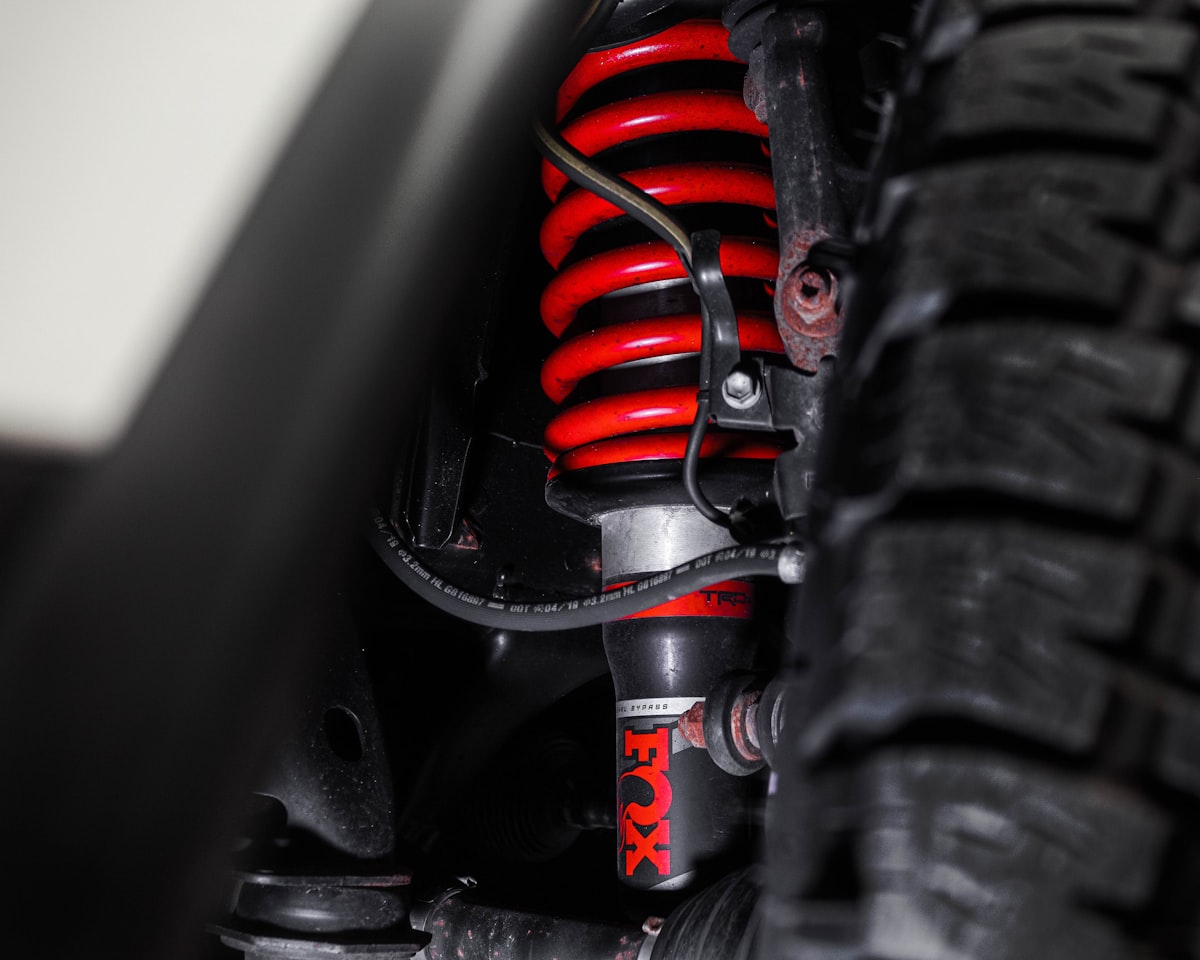
Brands like Bilstein (their 5100 series is practically the gold standard for lifted trucks) and Fox 2.0 Performance Series are the go-to monotube options. The Bilstein 5100 is particularly popular because it's ride-height adjustable on many applications, letting you dial in your front lift height right at the shock.
A coilover is essentially a shock absorber with a coil spring mounted around it as an integrated unit. This design gives you adjustable ride height and, on higher-end units, adjustable preload and damping.
Pros: Precise ride height adjustment, improved handling and weight transfer characteristics, generally excellent ride quality when properly set up, and they look serious under your truck.
Cons: Significantly more expensive, installation is more involved (this is not typically a driveway job), and the coil spring rate needs to be matched to your truck's weight — including any accessories, armor, or cargo you regularly carry.
Best for: Performance-oriented builds, trucks that see real off-road use, or owners who want the best possible ride quality and are willing to invest in it.
Price range: $350-$1,200+ per shock (for the complete coilover assembly).
Icon Vehicle Dynamics and King Shocks are the leaders here, with Fox also offering excellent coilover options in their 2.5 and 3.0 lineups.
Remote reservoir shocks add an external reservoir connected to the main shock body by a high-pressure hose. This extra reservoir increases the total fluid volume and provides additional cooling capacity.
Pros: Maximum heat resistance, the most consistent damping performance available, many offer external compression and rebound adjustment, and they're virtually immune to shock fade even under the most demanding conditions.
Cons: The most expensive option, they require additional mounting space for the reservoir, and installation complexity is higher.
Best for: Serious off-road trucks, desert runners, prerunners, trucks that regularly tow heavy loads in extreme heat, and anyone who demands the absolute best suspension performance available.
Price range: $500-$2,000+ per shock.
King Shocks, Fox Racing Shox (2.5 and 3.0 series with remote reservoirs), and Icon dominate this category. These are the shocks you see on trophy trucks, professional off-road vehicles, and the most serious builds in the lifted truck world.

This is where a lot of truck owners get tripped up. Shocks need to be the correct length for your specific lift height, and "close enough" doesn't cut it. A shock that's too short will limit your suspension droop (downtravel), which hurts off-road articulation and can make the ride harsh. A shock that's too long can bottom out internally, destroying the shock and potentially damaging your suspension components.
Be honest with yourself here. If 95% of your driving is commuting on Hillsborough Avenue, running errands around Westchase, and the occasional trip to Clearwater Beach, you don't need $2,000 King remote reservoir shocks. A quality set of Bilstein 5100s or Fox 2.0s will give you an excellent ride and last for years.
On the other hand, if you're regularly running trails at places like Hard Rock Off-Road Park in Ocala, towing your fishing boat every weekend, or you've built a true overlanding rig for trips out to Big Cypress or the Everglades, investing in higher-end shocks pays real dividends in performance, comfort, and longevity.
Bigger, heavier tires (35s, 37s, or larger) add unsprung weight to your truck. Unsprung weight is any mass that isn't supported by the suspension — wheels, tires, brake components, and part of the axle and driveshaft. More unsprung weight means the shocks have to work harder to control wheel movement. If you're running 37-inch tires on heavy beadlock wheels, budget twin-tube shocks are going to struggle. Plan your shock investment accordingly.
Do you regularly load up the bed with tools, building materials, or camping gear? Do you tow a boat, trailer, or RV? Heavier loads compress the rear suspension, changing the shock's operating range and demanding more from the damping. If you tow or haul regularly, consider shocks with adjustable damping (like the Rancho RS9000XL or Fox shocks with adjustable compression) so you can firm things up when loaded and soften the ride when empty.
Here's something most articles won't tell you: the valving inside the shock — the specific tuning of the piston, shim stacks, and fluid flow — matters more than the brand name on the outside. Two monotube shocks from different brands at the same price point can ride completely differently because of how they're valved.
This is one of the biggest reasons professional installation and consultation matter. A shop that works on lifted trucks every day knows how different shocks actually perform on your specific truck, with your specific lift, tires, and driving habits. That hands-on experience is worth more than any forum post or YouTube review.
After years of building and servicing lifted trucks here in Tampa, we've seen every mistake in the book. Here are the most common ones:
Every brand has its strengths and ideal applications. Here's how we break it down based on real-world experience:
Tampa's climate is worth mentioning because it genuinely affects your suspension. Our combination of extreme heat, heavy rain, and salt air (especially if you're near the coast or driving on Bayshore) creates unique challenges:
Even the best shocks don't last forever. Here are the signs it's time for a replacement:
Most quality aftermarket shocks last 50,000-80,000 miles under normal driving conditions. Budget shocks may need replacement in as few as 15,000-25,000 miles, especially on a lifted truck with larger tires. Higher-end shocks from King, Fox, and Icon can often be rebuilt rather than replaced, extending their useful life significantly and saving money in the long run.
We know plenty of truck owners are capable of bolting on shocks in their garage, and for a basic bolt-on swap, that's absolutely fine. But here's what professional installation gets you that a driveway job typically doesn't:
At Redline Auto Creations, we've been building, lifting, and dialing in trucks here in Tampa for years. We know what works on Florida roads, we know what holds up in our heat and humidity, and we know how to match the right shocks to your truck, your lift, and your driving style. Whether you're running a leveled Tacoma, a 6-inch lifted Silverado, or a fully built F-250 that tows every weekend, we'll get you on the right setup.
We carry and install shocks from Fox, Bilstein, King, Icon, Rancho, Rough Country, and more. We'll walk you through the options, explain the real-world differences, and make sure you drive away with a truck that rides the way it should.
Give us a call at (813) 544-4009 or visit us online at redlineautocreations.com to schedule your shock upgrade consultation. Your truck — and your spine — will thank you.

At Redline Auto Creations, we specialize in crafting custom vehicles with precision and passion. From wheels and tires to suspension, performance upgrades, and custom designs, we bring your vision to life. Contact us today and transform your ride.
© 2026 Redline Auto Creations LLC. All Rights Reserved.
11626 N Florida Ave, Tampa, FL 33612

.png)






