You finally pulled the trigger. Your truck is sitting a few inches higher, the stance looks aggressive, and you are already thinking about what wheels and tires come next. But once you drive off the lot after a lift kit installation, you start noticing things. The steering feels a little different. The ride has changed. Maybe your gas mileage dropped a tick. Is something wrong?
Probably not. The truth is, lifting a truck changes the entire geometry of the vehicle. It is not just a cosmetic upgrade. When you raise the body or suspension, you are altering the engineering that the factory spent millions of dollars dialing in. That does not mean lifting your truck is a bad idea. Far from it. It just means you need to understand what changes so you can plan for them, maintain your truck properly, and make sure the shop doing the work actually knows how to address each one.
Here at Redline Auto Creations in Tampa, FL, we install lift kits every single week. From budget-friendly leveling kits to full six-inch suspension lifts, we have seen every scenario. And one of the most common conversations we have with customers is about what happens after the install. So let us break down the seven things that change after you lift your truck and what a good shop does about each one.
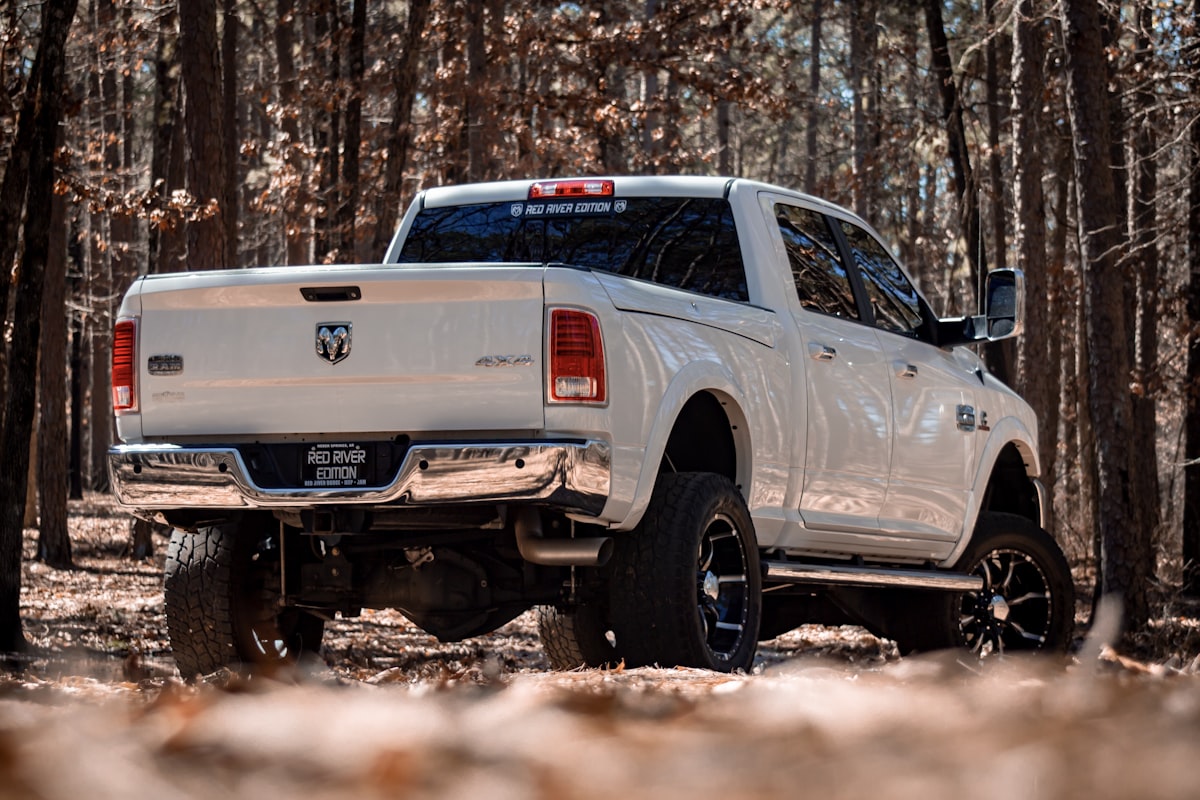
This is the big one, and it is the first thing any reputable shop addresses after a lift kit installation. When you raise the suspension, you change the angles of the tie rods, control arms, and steering linkage. The factory alignment specs no longer apply because the geometry of the entire front end has shifted.
Without a proper alignment, your truck might pull to one side, the steering wheel could be off-center, or you might feel a vague, wandering sensation on the highway. Some drivers describe it as the truck not wanting to track straight, especially at interstate speeds heading down I-275 or across the Howard Frankland Bridge.
Lifting a truck typically pushes the caster and camber angles out of spec. Caster is the forward or rearward tilt of the steering axis, and it is critical for straight-line stability and steering return. Camber is the inward or outward tilt of the tire when viewed from the front. Toe angle, which is whether the front of the tires point inward or outward, also shifts. On trucks with independent front suspension like the Chevy Silverado or Ford F-150, the upper control arms often need to be replaced with aftermarket units from brands like Icon Vehicle Dynamics, SPC, or Rough Country to restore proper alignment range.
At Redline Auto Creations, every lift kit installation includes a full four-wheel alignment. We also evaluate whether the factory upper control arms can achieve proper specs or whether upgraded arms are needed. For lifts over three inches on IFS trucks, we almost always recommend aftermarket upper control arms. This is not an upsell. It is a necessity to protect your tires and keep you safe on the road.
One of the most common questions we get at the shop is whether a lift kit will make the truck ride rough. The honest answer depends entirely on the quality of the kit and the type of lift you choose.
A basic spacer lift or leveling kit from brands like Rough Country or ReadyLIFT uses spacers to raise the truck on its existing suspension. You are not changing the shocks or springs, just adding height. The ride quality usually stays similar to stock, though you may notice slightly firmer impacts over bumps because the shocks are now operating at a different point in their travel range.
A full suspension lift from BDS, Fabtech, or Pro Comp replaces the springs and often includes new shocks. Here is where ride quality can vary dramatically. If the kit ships with basic twin-tube shocks, the ride will be functional but nothing special. Upgrade to monotube shocks from Fox, Bilstein, or King, and you can actually improve the ride over stock. Fox 2.0 Performance Series shocks typically run $150 to $250 each, while Bilstein 5100 series shocks are in the $100 to $180 range. King shocks and Icon coilovers sit at the premium end, often $400 to $800 per corner, but they offer adjustable damping that lets you fine-tune the ride for Tampa's mix of highway cruising and rough construction zones.
We always talk to customers about how they actually use their truck. If you are daily driving around Tampa, hauling the family to Clearwater Beach on weekends, and occasionally towing a boat, we are going to recommend different shocks than someone who is hitting trails at Hard Rock Off-Road Park. Matching the suspension to the use case is what separates a professional installation from a parts-slapper job.

Nobody lifts a truck for better gas mileage. But it helps to know what to expect so you are not caught off guard at the pump.
After a lift kit installation, your truck sits higher in the air, which increases its frontal profile and aerodynamic drag. Even a two-inch lift creates measurably more wind resistance at highway speeds. If you also add larger, heavier tires, which most people do, you are compounding the effect. Bigger tires have more rolling resistance and more rotational mass, which means the engine has to work harder to accelerate and maintain speed.
A two to three inch lift with stock-size tires might cost you half a mile per gallon to one mile per gallon. A six-inch lift with 35-inch or 37-inch tires can drop fuel economy by two to four miles per gallon, sometimes more. On a truck that was getting 18 mpg highway, you might see 14 to 16 mpg after a significant lift and tire upgrade. With Tampa gas prices hovering where they do, that adds up over the course of a year.
We help customers set realistic expectations before the build. We also recommend re-gearing the axles when running significantly larger tires. If your truck came with 3.21 gears and you jump to 35-inch tires, the engine is lugging at every RPM. Swapping to 4.56 or 4.88 gears puts the engine back in its power band, which can recover some of that lost fuel economy and restore the driving feel. Re-gearing typically runs $1,200 to $1,800 per axle for parts and labor, but it makes a dramatic difference in drivability.
This is a topic that a lot of shops and online forums gloss over, but it matters for safety. After a lift kit installation, your braking dynamics change in measurable ways.
Bigger, heavier tires increase the rotational mass that your brakes have to stop. A set of four 35-inch tires on heavy off-road wheels can add 80 to 120 pounds of unsprung weight compared to stock. Your factory brakes were designed to stop the stock wheel and tire combination, not an extra hundred pounds of rotating mass. The result is longer stopping distances, especially from highway speeds.
The higher center of gravity also causes more weight transfer to the front brakes during hard stops, which increases nose dive and can make the truck feel less planted under braking.
For moderate lifts with slightly larger tires, the factory brakes are usually adequate, but we always inspect pads, rotors, and brake fluid condition during the install. For trucks running 35-inch or larger tires, we often recommend upgrading to larger rotors or a big brake kit. Brands like PowerStop, Baer, and Wilwood offer kits that bolt up to most popular trucks. A good set of slotted rotors and high-performance pads can run $400 to $800 for a front set and make a noticeable difference in stopping power. We also recommend more frequent brake inspections after lifting because the increased load accelerates wear.
Uneven tire wear after a lift is one of the most common complaints we hear from people who had their truck lifted at a shop that did not do the job right. It is almost always avoidable.
If the alignment is off after the lift, you will see the results on your tires within a few thousand miles. Inner edge wear usually indicates too much negative camber. Outer edge wear suggests positive camber. Feathering or scalloping across the tread is often a toe issue. On solid axle trucks like the Ram 2500 or Ford Super Duty, track bar alignment becomes critical because a misaligned track bar shifts the entire axle to one side, causing the truck to dog track and wear tires unevenly.
A set of quality off-road tires in 33-inch to 35-inch sizes runs $250 to $400 per tire for popular brands like BFGoodrich KO2, Nitto Ridge Grappler, Toyo Open Country, or Falken Wildpeak. That is $1,000 to $1,600 for a set of four. Burning through those in 15,000 miles instead of 50,000 because of a bad alignment is an expensive mistake.
Beyond the initial alignment, we recommend a follow-up alignment check at 500 miles after installation. New components settle, bolts seat into their final position, and bushings break in. That 500-mile recheck catches any shifts before they cause tire damage. We also rotate tires every 5,000 to 7,500 miles and check alignment annually or whenever you notice any pulling or unusual wear patterns.
This is the one that can actually damage your truck if it is not addressed, and it is the one that budget lift kits most often ignore.
When you lift a truck, the angle between the transfer case output and the axle input changes. On trucks with a rear driveshaft, the pinion angle at the rear axle shifts. If the driveshaft is operating at too steep an angle, you get vibrations, and more importantly, you accelerate wear on the U-joints and carrier bearing. On trucks with independent front suspension, the front CV axles get stretched toward their maximum operating angle. CV joints have a limited range of motion, and exceeding it causes binding, clicking during turns, and premature failure.
The most common symptom is a vibration at highway speeds, particularly between 45 and 65 mph. Some guys drive around with this vibration for months, thinking it is just how a lifted truck feels. It is not. It is a driveshaft angle problem, and if you ignore it, you will be replacing U-joints, carrier bearings, or even the driveshaft itself.
For lifts over two inches, we evaluate the driveshaft angles and determine whether a correction is needed. Solutions vary by truck. Some kits include a transfer case drop kit that lowers the transfer case to restore the driveshaft angle. On solid axle trucks, adjusting the pinion angle with angled shims or adjustable control arms solves the problem. For IFS trucks, differential drop kits or CV axle spacers can bring the front axles back into safe operating range. On larger lifts, a custom driveshaft with a double-cardan joint eliminates vibration completely. These details matter, and they are the difference between a truck that drives great for years and one that shakes itself apart.
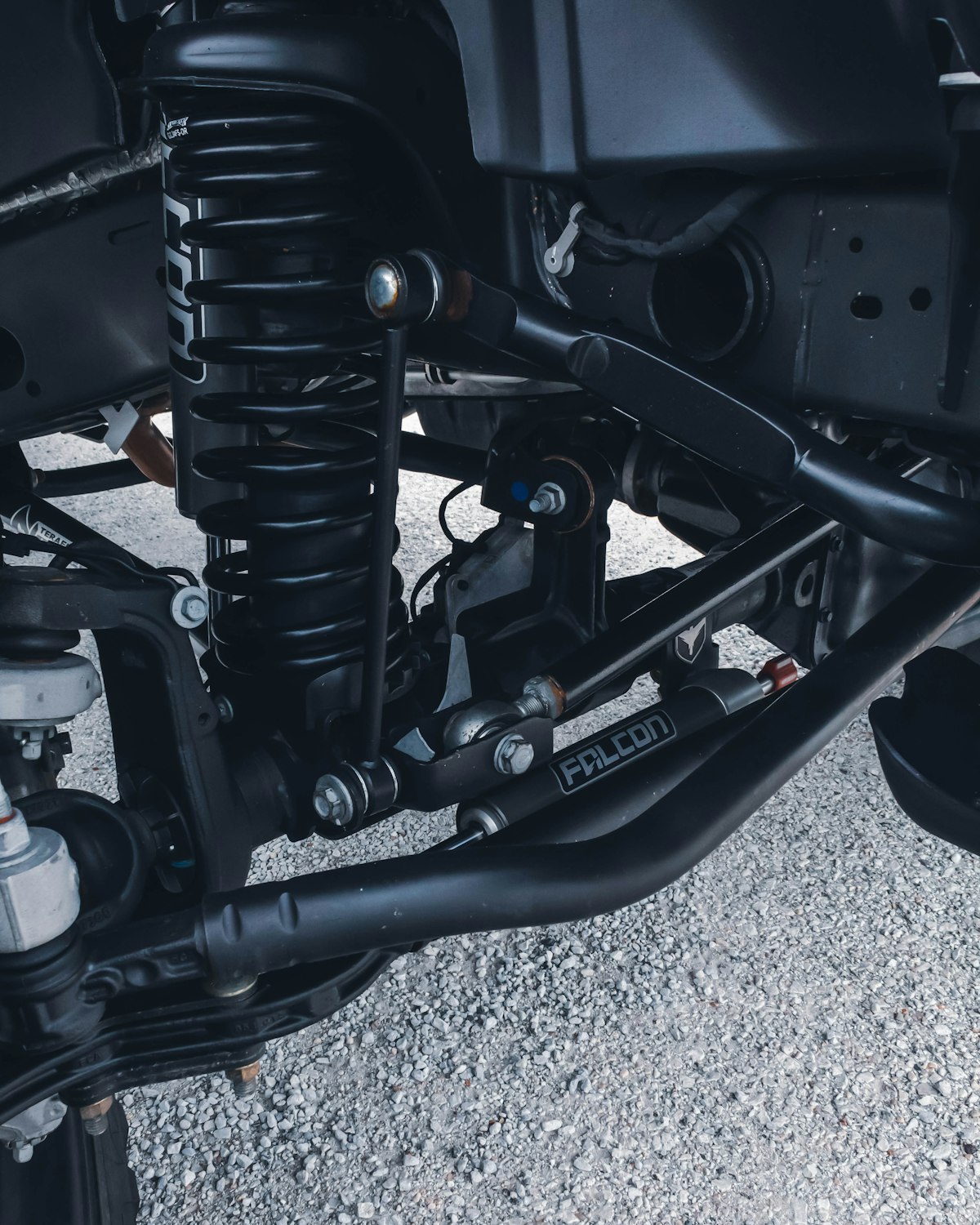
Physics does not care how good your truck looks. Raise the center of gravity, and the handling characteristics change. Period.
A lifted truck has a higher center of gravity, which means more body roll in corners, more weight transfer during lane changes, and a greater tendency to feel top-heavy, especially on Tampa's highway on-ramps and cloverleaf interchanges. This effect is magnified if you add heavy bumpers, roof racks, or a rooftop tent. Every pound you add above the axle line raises the center of gravity further.
We are not talking about your truck tipping over in a parking lot. Modern trucks are wide and stable. But the handling difference is noticeable, especially in emergency maneuvers. Quick lane changes feel more dramatic. Hard cornering produces more lean. And if you are towing a trailer, the higher center of gravity can amplify trailer sway.
Sway bars and upgraded end links help control body roll. Many quality lift kits from BDS, Icon, and Fabtech include sway bar relocation brackets or extended end links to restore proper sway bar geometry. For trucks that tow regularly, we sometimes recommend adding a rear sway bar if the truck did not come with one from the factory. Adjustable track bars on solid axle trucks help center the axle and reduce the loose feeling in corners. The goal is not to make your lifted truck handle like a sports car. It is to make sure it handles predictably and safely at the heights you are running.
The biggest mistake we see is treating a lift kit as a bolt-on accessory, like a tonneau cover or a set of running boards. A lift kit changes the fundamental geometry of your truck. Alignment, suspension, braking, drivetrain angles, tire wear, fuel economy, and handling are all affected. Ignoring any one of these creates problems down the road.
The good news is that every single one of these changes is manageable when you work with a shop that understands the complete picture. A proper lift kit installation is not just bolting on parts. It is re-engineering the truck to work correctly at the new ride height. That means proper alignment, correct shock valving, driveshaft angle correction, and all the supporting modifications that keep your truck driving safely and reliably for years to come.
At Redline Auto Creations in Tampa, FL, we do not just install lift kits. We build lifted trucks that drive right, wear tires evenly, and keep you safe on the road. Whether you are looking at a simple leveling kit or a full six-inch suspension system with 37-inch tires, we will walk you through every aspect of the build so you know exactly what to expect.
Give us a call at (813) 544-4009 or visit us online at redlineautocreations.com to schedule a consultation. We will help you choose the right lift, the right components, and the right setup for how you actually use your truck. Tampa roads, Florida weather, weekend adventures, we have seen it all and we will build your truck to handle all of it.

At Redline Auto Creations, we specialize in crafting custom vehicles with precision and passion. From wheels and tires to suspension, performance upgrades, and custom designs, we bring your vision to life. Contact us today and transform your ride.
© 2026 Redline Auto Creations LLC. All Rights Reserved.
11626 N Florida Ave, Tampa, FL 33612

.png)






